
Before a sculpture moves into fabrication, the model needs to communicate the intended form clearly. We develop 2D drawings into a 3D model and can split a customer’s 3D model into fabrication parts. The useful review is about the shape, proportions, surface and assembly decisions that will guide the finished work.
A drawing, a scale sample and a finish sample answer different questions. We make scale samples, or maquettes, on request and normally charge for them. Finish samples are also available on request and are approved before production. Here is how to prepare a model review that keeps those decisions clear.
Identify the design you want to develop
Start by identifying the drawing or model that represents the current design. If you have several versions, make clear which one we should work from and what remains open for discussion. A useful note distinguishes the features you want to preserve from areas where you want fabrication input.
For a sketch, describe the shape in words as well as showing it. Tell us which curves, openings, proportions or relationships give the work its character. We can develop a 2D drawing into a 3D model, but your description helps make the artistic priorities clear during that development.
For an existing 3D model, point out the same priorities. A complete-looking model can still leave questions about the finished surface or the way sections come together. Keep those questions with the model so that everyone reviewing it understands what is decided and what needs attention.
Review the complete form before its individual parts
Begin with the overall dimensions and proportions. State the units and identify which dimensions are fixed by the design or the site. Then consider how the sculpture reads from its intended viewing directions. For an asymmetrical work, label the front and other important views instead of relying on an assumed orientation.
Look at the relationships between parts: the width of an opening, the transition between curves, or the position of one element beside another. Describe the intended effect rather than giving an isolated instruction to make something larger or smaller. That keeps the review connected to the artwork as a whole.
Our custom sculpture fabrication process connects the design with material, fabrication and delivery. At the model-review stage, the priority is to make the form and its important features clear enough to carry into those later decisions.
Keep geometry and surface decisions separate
The shape and the surface both affect how a sculpture is seen, but they are not the same approval. Mark where mirror, brushed, sandblasted or coloured finishes belong. If the base and body differ, identify them separately. We can then discuss the surface without confusing it with a change to the geometry.
For mirror work, reflections become part of the visual effect. Our mirror surfaces are polished to 8K or higher, and we check the finished curves by eye for smooth, continuous reflections before packing. During design review, tell us where the reflective effect is especially important to the artwork.

Use our surface finish guide if the design team is still choosing the finish. Record the selected surface alongside the model, so a form approval does not leave the workshop guessing which areas should reflect or show texture.
Decide whether a maquette will help
A scale sample can provide another way to discuss the form. We make maquettes on request and normally charge for them. Tell us what you want the sample to help you review: the overall proportions, the relationship between elements, or a particular area that is difficult to explain in a drawing.
Keep the question specific. A maquette request that identifies the design issue is more useful than a request for a small version with no review purpose. The team can then discuss the sample alongside the model and keep its comments focused on the intended sculpture.
A finish sample serves a different purpose. We make these to the customer’s requirements and have them approved before production. If both shape and surface need review, list them separately. Record which sample addresses the form and which one records the finish you want on the completed work.
Plan the divisions for a large work
We can split a 3D model into fabrication parts, and large works are shipped in sections. The divisions need to be discussed with the assembly approach. For larger projects with our team on site, we usually weld the sections together and re-polish the joins.
Where no on-site team is involved, sections are generally designed to bolt together for local assembly. Tell us whether the project is considering an on-site team or installation guidance. We can discuss these options according to the project and country, then connect the model divisions to the agreed approach.
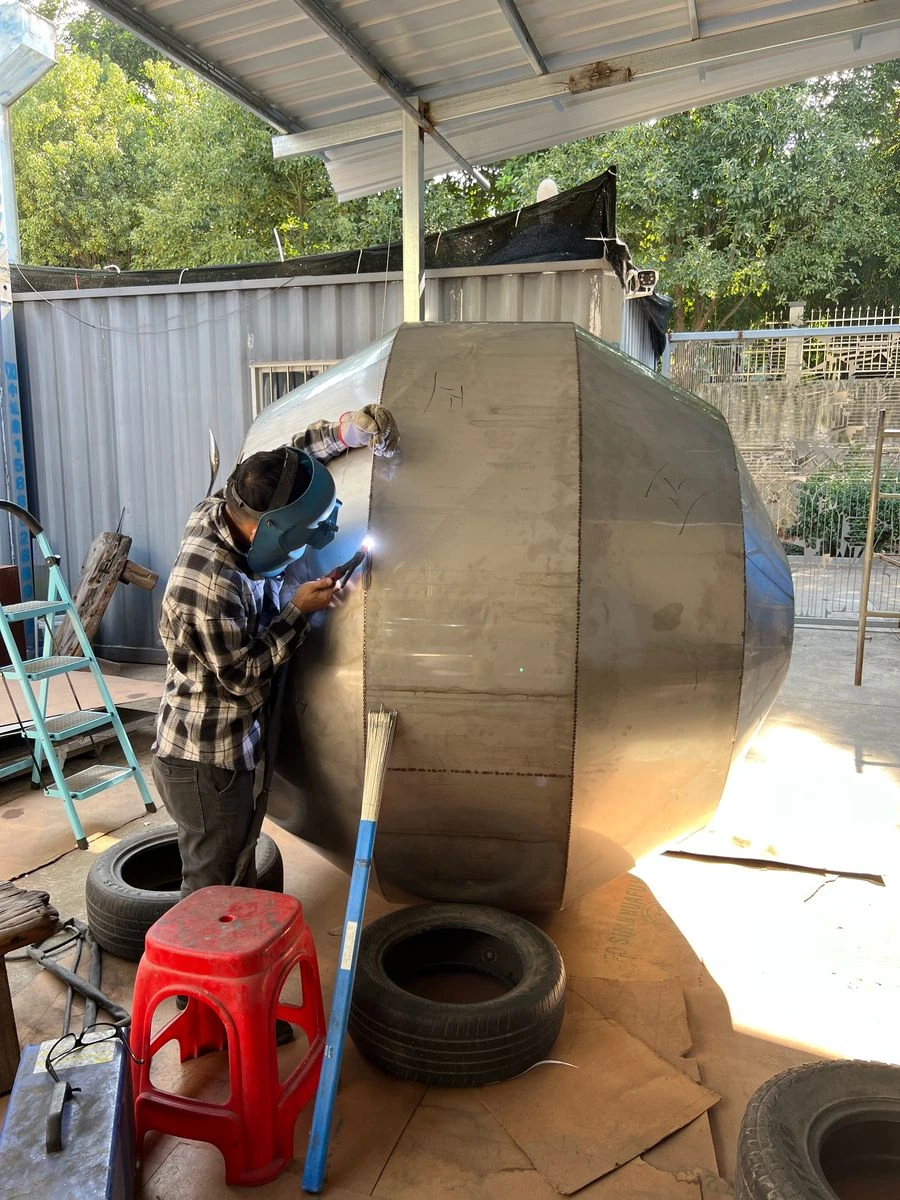
We fully weld our seams and polish them until they disappear into the surface. When reviewing the model, identify the visible surfaces and intended joins so that the finished appearance remains part of the assembly discussion. The detailed delivery questions are covered in our packing and installation guide.
Include the base and the site connection
Show how the sculpture is intended to meet its base or foundation. We supply bolt-down base plates or embedded anchor parts to suit the foundation requirements. Include the available site information and identify who is coordinating the foundation so that the model does not end at the visible body alone.
If part of the support should be concealed, mark that as a design intention for discussion. Keep the visual requirement and the foundation information together. This helps the project team review the artwork in its intended setting rather than approving a form without its connection to the site.
Make review comments easy to follow
Return comments against the version you reviewed. Identify the affected view or part, explain the requested change, and say which other features should remain as they are. When several people are involved, bring their comments into one clear set so that conflicting directions can be discussed.
- Modulo: confirm the overall proportions and the features that define the work.
- Surface: identify the material and finish areas, including the approved finish sample where requested.
- Parts: identify planned sections and the assembly approach being discussed.
- Site: include the base or foundation connection and known installation requirements.
- Open decisions: list anything that still needs discussion before fabrication.
For the initial inquiry, our quote request checklist helps assemble the project information. The model review goes further: it records the specific form and surface decisions that the project team wants carried into the sculpture.
Domande frequenti
Can you work from a 2D drawing?
SÌ. We develop 2D drawings into a 3D model. Include the intended dimensions and identify the curves, proportions and details that matter most, so these can be discussed as the form is developed.
Do we need both a maquette and a finish sample?
They answer different questions. A maquette helps the discussion of form and is made on request, normally charged. A finish sample records the surface direction and is approved before production. Tell us which decisions you need to review.
When should we discuss how a large sculpture joins together?
Include that discussion when the model is being divided into parts. Our on-site team usually welds and re-polishes large sections; where no on-site team is involved, sections are generally planned for bolted local assembly.
Bring your design into the fabrication discussion
Send us your drawing or model with the dimensions, intended finish, location and the decisions you want to resolve. We can discuss the form, samples and fabrication parts together, keeping your artistic priorities connected to the finished sculpture.
Related guides
Modern Art Sculpture è un marchio di Xiamen Meibile Import And Export Co., Ltd. Produciamo nelle nostre officine l'acciaio inossidabile, fibra di vetro e resina.